



Business psychology, as a discipline, is also known as Industrial and Organizational Psychology. It deeply studies human behavior relating to work and occupation by applying psychological theories and principles to organizations and individuals at workplaces.
In order to pursue a career in business psychology, you would require a Bachelor’s degree in Psychology, a Master’s Degree in Psychology, and PhD though it is not typically required. Applications of business psychology are wide-ranging and comprehensive in nature, including a variety of business and human behavior topics. You can get an online masters in psychology or take courses in person at a university.
According to a recent study by US News, industrial psychologists are ranked #2 in best science jobs with a median salary of $97,260 and a 0.5% unemployment rate. The top 25% in the market have the potential to earn more than $138,180 annual income.
Studying business psychology requires commitment and effort. In light of this information, let’s take a quick look at some of the most prominent areas of interest that you should learn about in order to implement business psychology at workplaces.
1. Associative Thinking
Associative thinking in psychology refers to the opening of all the avenues of the brain in which the mind is freely allowed to associate or automatically link up ideas, memories of existing knowledge, observations, and thoughts.
This can also be used to spark creativity in workers and make them think intuitively on business problems, finding solutions, and applying their talents in unique ways to accomplish organizational goals. Here are some tips through which associative thinking can be applied or achieve at workstations:
- Enabling people to connect and interact with diverse backgrounds, expertise, and departments of the organization.
- Brew observation skills by allowing employees to experience a new environment with a fresh pair of eyes.
- Ask workers to make inquiries and be inquisitive about a variety of work-related topics that may stem from professional constraints but challenge the existing dogmas.
- Encourage workers to experiment with new ideas and notions as well as to see things differently.
- Motivate and build the self-esteem of employees to act courageously and put forward new concepts or philosophies that could benefit business operations.
- Create a habit within employees to think out of the box when finding resolutions to existing problems or when facing bottlenecks.
2. Behavioral Priming
In psychology, behavioral priming is used to influence the actions of people by inducing an effect on them through a specifically designed stimulus.
The essence of behavioral priming, however, lies in not making the target audience aware of the actual purpose, and this is why many studies have shown to conclude that unconscious behavioral priming is indeed real.
In an organization, upper management and decision-makers could decide on a variety of stimulus that employees could be exposed to in order to make them more productive and enthusiastic about their work.
In fact, the workplace itself could be designed or decorated in such a manner that it induces a positive influence on the minds of workers to make them feel motivated and committed to their work responsibilities.
3. Emotional Quotient
Empathy and compassion are enduring qualities that can make mangers and workplaces become more supportive and understanding of the needs of their employees. This is why the emotional quotient of the upper management has to be improved so that they are able to comprehend the challenges faced by workers and be able to relate with them.
This, in return, will create a culture at the company that would promote helping others and bring about greater cooperation amongst team members. Here are some tips to help develop such a culture:
- Train your managers in the art of Mindful Listening and practice it regularly.
- Develop a drill to ask colleagues and subordinates about their ongoing work challenges.
- Take time out for employees and discuss their life outside of work and other troubles.
- Refrain from biases, making assumptions, prejudices, and prejudgments.
4. Fixed vs Learning Mindsets
Knowledge is power, there is always room from improvement, and learning is a never-ending journey. Those with fixed mindsets eventually limit themselves from acquiring new skills and would often relate to the phrase that an old dog cannot be taught new tricks.
This is not the case; however, as human ingenuity has shown time and time over again that it holds no parallel. This is why exactly you need to make sure that your workers, managers, and other professionals in the organizations adopt a learning mindset instead. Here are some of the ways you can encourage a learning mindset in your organization:
- Emphasize on acquiring new knowledge & skills together in groups through training programs.
- Set individual professional development goals that are openly communicated and transparent.
- Create an open communication culture where ideas can be freely floated, and innovation is rewarded.
5. FOMO
Marketing experts primarily use fear of missing out to capture the attention and curiosity of candidates and prospects. It stems from the social anxiety that occurs when one believes that others are making use of terrific opportunities while they are missing out on the all fun and benefits.

This can act as a double-edged sword. Hence managers should be advised to practice FOMO with caution and to ensure that it is only meant to encourage workers to improve their performance and gain higher productivity levels.
6. Influence
Mastering influence and the power to impact others at workplaces can enable you to lead and communicate with your subordinates effectively. Here is how you can exert influence and practice building influence in organizations:
- Build trust and credibility with your workers and colleagues
- Cultivate reliability and dependability through consistency
- Practice assertiveness without any aggressiveness or hostility
- Show maximum flexibility without dampening your work ethics, beliefs, and principles
- Focus on actions, outputs, and results rather than arguments and conflicts
7. Leadership
There comes a time where every employee of an organization has to showcase their leadership skills through which they have to make tough choices and calls.
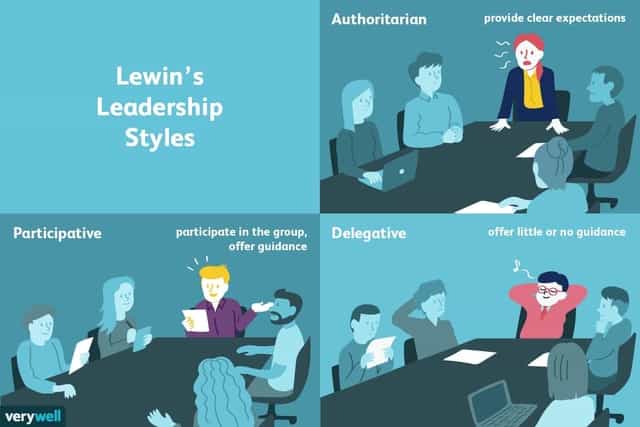
Hence for a business psychologist, it is important that you develop leadership skills in the workforce, such as:
- Asking them to hold themselves accountable and responsible for their work. They must ‘own’ their work.
- Showcase the importance of discipline at work and how self-restraint can help them from pitfalls.
- Empower them to take up new projects and tasks.
- Provide them with learning to develop skills and makes them a better professional at what they do.
- Cultivate situational awareness and the value behind time and space awareness.
- Train them in the art of conflict resolution and conflict management.
8. Motivation
Employee motivation is a major subject and theme studied in detail under the discipline of the field of business psychology. A lot of emphasis is made on how employee motivational levels can impact performance and yield better results as well as improve business productivity levels. Here are some tips to improve motivation at the office:
- Relay self-respect and self-pride within them so that they realize themselves as a valuable part of the bigger picture.
- Foster the belief in them that through hard work and perseverance, they can overcome any obstacle.
- Praise and reward employees for good performances or provide them with tangible benefits.
- Instead of micromanaging, allow employees to take charge and encourage autonomy.
- Provide a healthy work-life balance with a system that judges them fairly and based on equality.
9. Overcoming Failure & Rejection
When running an organization, there are always some failures, and at times people at the workplace do have to face rejection from their peers. However, through business psychology, you can teach employees to overcome both failures and rejection. Here is how you can teach them to deal with rejection:
- Bolster their courage to find closure and getting to the root cause rather than fleeing from the situation.
- Train them to gather feedback and information that resulted in an undesirable outcome.
- Teach them to always take rejection as a learning opportunity to better themselves.
- Make them learn how to take positive actions and steps to deploy the constructive change.
For example, if you are asking your employee for mobile application development, give them a free hand, help them initially and wait for the best result.
10. Organizational Behavior
Another major theme studied in business psychology is organizational behavior. This is the study of human behavior revolving around their individual performances and activities within an organization or workplace setting. Students looking for dissertation editing services for business studies also study organizational behavior as one of their core subjects. Major topics and subjects under this umbrella include:
- Organizational culture
- Professional consultation & counseling
- Employee mistreatment including abuse & bullying
- Leadership and management roles
- Occupational stress
- Public relations & roles of bureaucracy, to name a few
11. Paradigm Shifts
Paradigm shifts are defined as a concept where a person undergoes a change in their perspective, and their looking glass is shattered or changed completely. As a business psychologist, you can use various methods to induce paradigm shifts to clear misconceptions and combat unnecessary biases present in the minds of workers. Here is how you can induce paradigm shifts in others:
- Question the base of their belief
- Find examples in real life that go against their biases
- Support your claims with factual information and scientific evidence as well as logical reasoning
- Facilitate transformation or shift with planned actions and activities
12. Propinquity Effect
Propinquity effect is more closely related to social psychology, where one of the main factors is the physical or psychological proximity between people. This leads to an interpersonal attraction that helps in developing strong bonds of togetherness and kinship.
You can apply the propinquity effect to create a feeling of togetherness in the organization and use it nurture unity in the workforce. Furthermore, it can also assist in engaging employees as well as cultivating social interactions within them that can be stretched outside of the workplace as well.
13. Reciprocity
Reciprocity is another study of social psychology where it can be used to cultivate a culture that includes people responding to kind gesture with a kind gesture of their own in return.
This way, one positive action can breed into a series of positive actions and thus help to build a community where kind actions are rewarded. For businesses and organizations, reciprocity can assist in creating a behavior pattern of employees that encourages supporting one another as well as build up team spirit and morale.
14. Verbatim Effect
The Verbatim effect is a cognitive bias that can cause people to remember the gist of information presented to them that is general in meaning. Hence people are able to capture the gist of the information rather than remembering the specific details or the actual manner through which the information was provided originally.
This can serve to be a double-edged sword, so as a business psychologist, you would require restraint as to where it can be utilized to benefit employees and where it should be avoided. One constructive use case of verbatim effect could be to break down complex chunks of information into a simple to understand and digestible parts for employees.
Conclusion
Industrial and organizational psychology as a discipline is huge and covers a wide variety of interesting topics that can help an organization overcome obstacles and face work-related issues and concerns.
As a business psychologist, you can train yourself further to contribute towards organizational success and improving the performance of employees by studying their attitudes and behaviors.
Many applications of business psychology revolve around training programs, hiring practices, building teams, gathering feedback, and governing management systems.
