


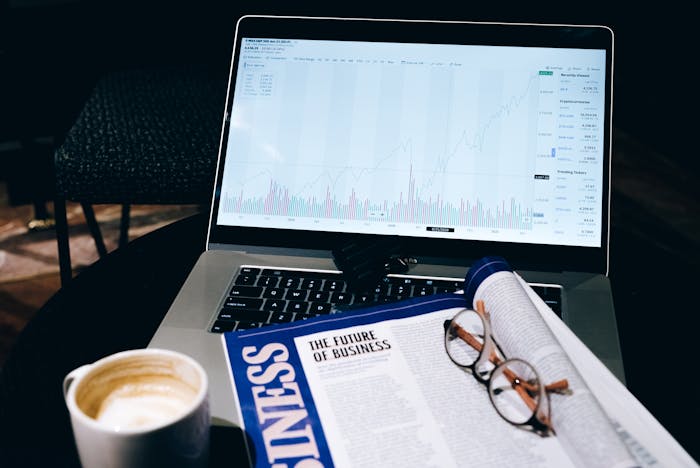
Technical analysis has become a key tool in modern futures trading, helping traders make sense of market behavior through price patterns, volume, and momentum indicators. While many economic factors influence futures markets, many traders rely on technical analysis to make short-term and long-term trading decisions. This method emphasizes market psychology, trends, and statistical indicators instead of economic fundamentals.
As futures markets grow more complex and global, the demand for efficient and timely trading decisions becomes more critical. We will explore how technical analysis shapes strategies for trading futures, reduces uncertainty, and influences outcomes in the futures trading world. By understanding these principles, traders can develop informed strategies, better manage risk, and adapt quickly to changing market conditions.
Key Functions of Technical Analysis in Futures Trading
1. Identifying Market Trends Through Charts
Chart analysis is the cornerstone of technical analysis, offering traders a visual interpretation of price movements over time. Charts are a foundation for recognizing upward, downward, or sideways trends in futures trading. These trends are essential because they influence the timing of entries and exits in trading positions. For example, a futures trader observing a series of higher highs and higher lows on a daily chart may conclude that a bullish trend is underway. Recognizing such trends allows traders to ride momentum to capture gains or protect against losses.
Technical indicators like moving averages and trendlines help define the market’s overall direction more clearly. When prices exceed a moving average, traders often interpret this as a sign of sustained bullish momentum. On the other hand, when prices break below a trendline, it may signal a shift toward bearish behavior. These tools, though simple, carry significant weight in shaping trading strategies and decision-making.
2. Using Indicators to Time Entry and Exit Points
Beyond spotting trends, technical analysis provides tools to determine the optimal time to enter or exit a trade. Futures markets can be volatile, and poor timing can lead to missed opportunities or premature losses. Indicators like the Relative Strength Index (RSI), Moving Average Convergence Divergence (MACD), and Bollinger Bands offer insight into market conditions such as overbought or oversold levels. For instance, when the RSI rises above 70, traders may interpret this as a sign that a futures contract is overbought and due for a correction.
Conversely, an RSI reading below 30 might suggest a buying opportunity. MACD crossovers can signal momentum shifts, while Bollinger Bands highlight price extremes and potential reversals. When used together, these indicators provide a layered perspective of market dynamics, reducing the guesswork involved in trading. They allow traders to build confidence around their decisions and refine their timing, essential when margins and stop-loss levels can be quickly tested in futures markets.
3. Recognizing Patterns to Anticipate Price Movements
Pattern recognition is a widely used component of technical analysis that helps traders anticipate future price actions. In futures trading, recurring chart patterns such as head and shoulders, triangles, flags, and double tops/bottoms offer clues about market sentiment and direction. These patterns form because of repeated investor behavior—fear, greed, and momentum—creating predictive signals that traders can act upon.
For instance, a breakout from a symmetrical triangle pattern often precedes a sharp price movement, which traders can use to place positions accordingly. Similarly, a double top may indicate a weakening trend and the potential for a reversal, prompting a trader to exit a long position or initiate a short. The reliability of these patterns increases when supported by volume and momentum indicators. Traders often watch for a surge in volume to confirm a breakout or breakdown. This combination of visual patterns and supporting data makes technical analysis a practical method for forecasting price movements in futures trading.
4. Managing Risk and Enhancing Trade Discipline
Technical analysis also plays a significant role in risk management, helping traders set clear parameters for stop-loss orders, profit targets, and trade sizing. Managing risk is crucial in futures markets, where leverage can magnify both profits and losses. Technical tools allow traders to define levels of support and resistance, which become natural boundaries for setting stops and targets. For example, a trader entering a long position might place a stop-loss just below a key support level, assuming a breach could signal a further drop.
Similarly, technical resistance levels serve as potential take-profit zones. These disciplined strategies help prevent emotional decision-making, which can be detrimental in fast-moving futures markets. Additionally, adhering to a technical plan keeps traders consistent, ensuring that every trade is executed based on data rather than hunches. This consistency is essential for long-term success and can help mitigate the impact of sudden market swings, reducing the overall volatility of a trading portfolio.
Technical analysis offers a valuable framework for making sense of the often unpredictable futures markets. Through chart interpretation, indicator application, pattern recognition, risk management, and volume analysis, traders gain a clearer understanding of market behavior and improve their decision-making processes. Futures trading demands speed and discipline, and technical analysis provides a structured method for executing trades based on observable market data. As futures markets continue to evolve, the importance of having a methodical and data-driven approach like technical analysis will likely grow, offering consistent value to those who commit to understanding and applying its principles effectively.
Read Also: Top Features to Look for When Choosing Trading Software
