


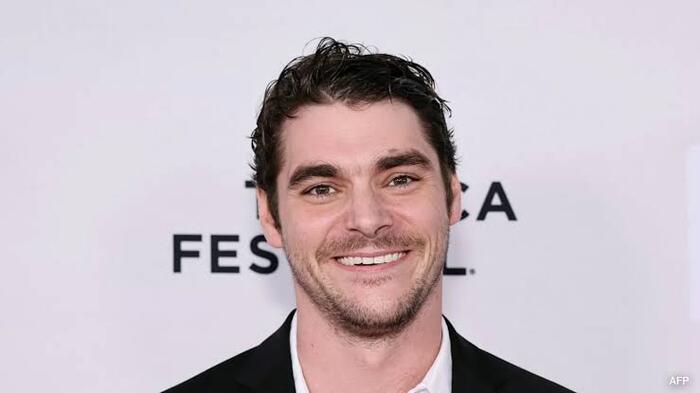
The entertainment industry is mourning the loss of actor RJ Mitte, best known for portraying Walter “Flynn” White Jr. in the critically acclaimed television drama Breaking Bad. Mitte died on October 12, 2026, at the age of 34, according to reports confirmed by his representatives. His death has prompted an outpouring of grief from fans, fellow actors, and people who admired his work both on screen and as an advocate for disability rights.
Mitte became widely recognized for his performance in the hit AMC series, which followed the transformation of chemistry teacher Walter White into a dangerous drug manufacturer. While the show explored crime, family conflict, and moral choices, Mitte brought an important human dimension to the story through his portrayal of Walter White Jr., a teenager living with cerebral palsy. His own experience with the condition helped him bring authenticity to a character who became an important part of the show’s emotional foundation.
Beyond his acting career, Mitte worked to improve the representation of people with disabilities in entertainment and public life. He used his growing profile to challenge stereotypes and encourage greater inclusion in film and television. His passing represents a significant loss for the entertainment community and for those who found encouragement in his commitment to disability awareness.
According to Reuters, the actor’s death was confirmed through a statement from his representatives. His legacy extends beyond a single television role, reflecting a career built around creativity, determination, and the belief that people with disabilities deserve meaningful opportunities in the entertainment industry.
RJ Mitte’s Death Confirmed
News of Mitte’s death emerged on October 12, 2026, with representatives confirming the loss of the actor and disability rights advocate. In a statement shared with entertainment publications, his representatives described him as a beloved actor, philanthropist, and passionate advocate for disability rights. The announcement quickly attracted attention from audiences familiar with his work in Breaking Bad and from people who followed his efforts to promote inclusion.
According to CBS News, Mitte died in Brownsville, Texas, at the age of 34. The announcement shocked fans who had watched him grow from a young performer into an established actor with projects spanning television, film, and advocacy. His death also renewed public attention to his work supporting people with disabilities.
His representatives highlighted the connection between his personal experience and his professional achievements. Rather than allowing his disability to define the limits of his career, Mitte built a public platform through which he could discuss accessibility, representation, and the importance of treating disabled performers as capable professionals.
The loss has been particularly painful for those who knew him through his work on Breaking Bad. The series remains one of the most recognizable television dramas of its era, and Mitte’s character played a central role in its portrayal of family relationships. Although the circumstances surrounding a person’s death should be approached with sensitivity, the broader significance of Mitte’s life and career deserves equal attention.
What We Know About His Passing
Mitte’s representatives confirmed his death on October 12, 2026. News organizations subsequently reported that he had died in Texas at age 34. His passing was also confirmed by local authorities, as reported by major media outlets.
His death was later reported as suicide by his representatives and in coverage of statements from those close to him. Such news can be deeply distressing, particularly for people who admired the actor or identified with his experiences. It is important not to assume that a person’s public image reveals everything about their private circumstances, and no single explanation can capture the full complexity of an individual’s life.
The response to his death has included tributes from colleagues, fans, and people involved in disability advocacy. Many have emphasized his kindness, professional determination, and efforts to create more opportunities for disabled actors.
For those affected by this news, it is also a reminder that emotional struggles can affect people from every background, including those who appear successful or confident in public. Anyone experiencing suicidal thoughts or a mental health crisis should seek support from a trusted person or a qualified professional. In the United States, people can call or text 988 to reach the Suicide & Crisis Lifeline.
Who Was RJ Mitte?
RJ Mitte, whose full name was Roy Frank Mitte III, was an American actor and producer who became internationally known through Breaking Bad. Born in Jackson, Mississippi, he was adopted shortly after birth and raised in Lafayette, Louisiana. His upbringing in the American South preceded his move to Los Angeles in pursuit of an acting career.
Mitte was diagnosed with cerebral palsy when he was three years old. The condition affects movement and posture, and its effects vary considerably from one person to another. He grew up navigating challenges associated with his disability while developing an interest in entertainment. His eventual success offered a visible example of a disabled performer establishing a career in an industry where opportunities for disabled actors have often been limited.
He began pursuing acting professionally as a teenager, securing smaller roles before landing the part that would change his life. His early appearances included television productions such as Hannah Montana and Everybody Hates Chris. Those experiences helped him gain familiarity with professional sets and develop the skills necessary for more demanding roles.
The opportunity to join Breaking Bad gave Mitte a platform that extended far beyond his early television work. His performance reached a worldwide audience and introduced many viewers to an actor whose lived experience informed his portrayal of a disabled teenager. He subsequently used the attention generated by the series to explore new creative opportunities and speak publicly about inclusion.
Early Life and Journey Into Acting
Mitte’s journey into Hollywood was not simply a story of landing a successful television role. Like many young performers, he had to learn how to audition, work with directors, understand scripts, and adapt to the demands of production. His experience with cerebral palsy also meant that he entered an industry in which disability was frequently misunderstood or represented through narrow stereotypes.
Moving to Los Angeles helped him pursue professional opportunities, and his early television appearances provided a foundation for his development as an actor. These smaller parts may not have brought him widespread recognition, but they formed an important stage in his career. Every production offered the chance to learn more about performance and the collaborative nature of filmmaking.
His breakthrough eventually demonstrated that an actor’s physical condition does not determine the range of stories they can tell. Mitte’s work also helped challenge the assumption that disabled performers should be limited to roles specifically written around disability. His career included characters and projects across different genres, reflecting a broader ambition than simply representing his own experience.
The path he followed helped make him a recognizable figure for aspiring performers who rarely saw people with disabilities represented as working professionals in mainstream entertainment. His achievements offered a reminder that access to opportunity, rather than assumptions about ability, can shape a person’s professional future.
RJ Mitte’s Breakthrough Role in Breaking Bad
Mitte’s defining role came in Breaking Bad, the acclaimed AMC drama created by Vince Gilligan. The series premiered in 2008 and followed Walter White, a high school chemistry teacher whose terminal cancer diagnosis leads him into the illegal drug trade. As Walter becomes increasingly ruthless, the consequences of his choices spread through his family and the criminal world around him.
Mitte played Walter White Jr., also known as Flynn, the son of Walter White and Skyler White, portrayed by Anna Gunn. Walter Jr. begins the story as a teenager who admires his father and remains largely unaware of his secret activities. As the series progresses, he becomes increasingly affected by the tension and deception within his household.
The character’s perspective gave the series an important emotional counterpoint to its criminal storyline. While Walter White’s decisions drove much of the plot, the reactions of his family demonstrated how those decisions damaged the people closest to him. Mitte’s performance helped audiences understand the confusion, loyalty, anger, and disappointment experienced by a young person confronting the collapse of his family life.
Mitte appeared throughout the show’s five-season run, which concluded in 2013. His character’s cerebral palsy was incorporated into the story, allowing the actor to bring personal experience to the performance. The role also helped broaden conversations about how disabled characters could be included in popular television without reducing them to a single defining characteristic.
Playing Walter White Jr.
Walter White Jr. was more than a supporting character in a crime drama. He represented a family member whose understanding of the truth developed gradually as the consequences of Walter’s double life became impossible to ignore. His loyalty to his father and his relationship with his mother helped make the family’s conflicts feel personal rather than merely connected to the show’s criminal plot.
Mitte approached the role with an understanding of the physical realities of cerebral palsy, which contributed to the character’s authenticity. However, Walter Jr. was also a teenager with ordinary concerns, relationships, preferences, and emotional reactions. This combination mattered because it allowed audiences to see the character as a complete person rather than a representation of a medical condition.
The role attracted attention partly because it placed a disabled character within a major television production without making disability the only subject of his story. Walter Jr. participated in the same family drama, tension, and character development that shaped the experiences of the other people around him.
For many viewers, Mitte’s portrayal became one of the memorable elements of Breaking Bad. The show was filled with complex characters, but its family relationships gave the story much of its emotional weight. Walter Jr.’s changing view of his father helped illustrate the human consequences of Walter White’s transformation.
His On-Screen Relationship With Bryan Cranston
One of the most important relationships in Breaking Bad was the one between Walter White and his son. Bryan Cranston portrayed Walter as a man whose initial desire to provide for his family gradually became entangled with pride, control, and criminal ambition. Mitte’s performance as Walter Jr. offered a contrasting perspective on the father at the center of the story.
At the beginning, Walter Jr. admired his father and believed in his intentions. As secrets emerged and the family’s circumstances deteriorated, that admiration became increasingly difficult to maintain. The relationship provided a way for viewers to measure Walter’s moral decline through the experiences of someone who had once trusted him completely.
The bond between Cranston and Mitte also extended beyond the fictional family. Following Mitte’s death, Cranston shared an emotional tribute, expressing his grief and recalling the actor’s development from a young performer into a determined professional. He also reflected on Mitte’s advocacy for disabled performers and the work he undertook beyond the television series.
According to ABC News, Cranston said he had been in contact with Mitte in the weeks before his death and that they had been planning to meet for lunch. His words reflected both the personal nature of the loss and the enduring connection formed during their years working together.
Living With Cerebral Palsy
Cerebral palsy is a group of lifelong conditions that affect movement, muscle control, coordination, and posture. It is associated with differences or damage in the developing brain, and its effects vary widely among individuals. Some people experience relatively mild movement difficulties, while others require substantial assistance with everyday activities.
Mitte was diagnosed with cerebral palsy during early childhood and grew up with the condition. His experience informed his performance in Breaking Bad, where the character he played also had cerebral palsy. That connection made his casting particularly meaningful in an industry where disabled characters have historically been played by actors without the same lived experience.
His career helped demonstrate the value of authentic representation. When actors bring their own experiences to a role, they may contribute details that are difficult to capture through research alone. At the same time, no single performer can represent every person with the same disability, because experiences, needs, and abilities differ from one individual to another.
Mitte’s public profile also helped encourage conversations about the barriers disabled performers face. These can include inaccessible production environments, limited audition opportunities, assumptions about what roles they can play, and a lack of representation behind the camera. Addressing these obstacles requires more than positive publicity; it requires practical changes in casting, production, accessibility, and workplace culture.
Read Also: 10 Celebrities Living with Multiple Sclerosis
Bringing Authenticity to the Screen
Mitte’s performance brought personal familiarity to Walter Jr.’s experience, but the character’s significance extended beyond the actor’s diagnosis. The story allowed him to portray a young person whose life included disability alongside relationships, family tensions, and the ordinary challenges of adolescence.
Authentic casting can help television portray disability with greater depth. Rather than relying entirely on assumptions, a production can benefit from performers who understand aspects of the experience being depicted. Their involvement can also encourage writers and directors to consider how disability affects daily life without allowing it to overwhelm every other part of a character’s identity.
In Breaking Bad, Walter Jr.’s cerebral palsy was visible, but it did not define his entire personality. He had opinions, made decisions, developed relationships, and reacted to the world around him. That fuller portrayal helped challenge the idea that disabled characters should appear only in stories specifically about overcoming disability.
Mitte’s work also demonstrated why representation should extend beyond a single successful role. Audiences benefit when disabled actors appear in a broad range of stories, including dramas, comedies, thrillers, and productions where disability is not the central theme. A more inclusive industry gives performers greater freedom to demonstrate their abilities and allows viewers to encounter a wider variety of human experiences.
RJ Mitte’s Career Beyond Breaking Bad
Although Breaking Bad remained the project most closely associated with Mitte, his career continued after the series ended in 2013. He pursued opportunities in television and film, taking on different characters and exploring projects outside the world of Walter White.
One of his notable television roles came in the teen drama Switched at Birth, which explored family relationships, identity, and communication. He also appeared in projects such as The Guardians of Justice, a superhero satire that offered a different creative environment from the grounded crime drama that first made him famous.
His film credits included The Oak Room, The Recall, and Triumph. These projects demonstrated his interest in working across genres rather than remaining tied to a single character or television franchise. His work also included producing and other creative activities, giving him opportunities to participate in entertainment beyond acting alone.
Mitte’s professional development reflected a common challenge for performers who become closely associated with one hugely successful role. Audiences may always remember a particular character, but an actor’s broader career depends on finding new opportunities and demonstrating different aspects of their talent. Mitte continued to explore those possibilities while remaining connected to the issues that had become important to him.
In 2026, he attended a screening of Talking to Strangers in Beverly Hills, according to reporting by PEOPLE. His later work showed that his creative ambitions continued well beyond the television role that first brought him international recognition.
Television, Film, and Other Creative Projects
Mitte’s career included a variety of productions, each offering a different kind of performance challenge. Television requires actors to develop characters over multiple episodes or seasons, while film projects often demand a more concentrated approach to storytelling. Working across both formats allowed him to gain experience with different production styles and creative teams.
His early guest appearances on television helped introduce him to the industry before Breaking Bad brought widespread attention. Later projects gave him opportunities to move into different genres and explore characters beyond Walter Jr. That range matters because successful actors often need to balance the expectations created by a famous role with a desire to keep developing professionally.
Mitte also worked in modeling and participated in projects connected to music and entertainment. These activities reflected an interest in using his public profile in different creative settings. His appearance in fashion and media projects also helped make disabled performers more visible in spaces where they have often been underrepresented.
For an actor, professional success is not measured only by the number of productions completed. It can also be reflected in the opportunities created, the people reached, and the conversations encouraged through the work. Mitte’s career connected those different measures, combining screen performances with a public commitment to greater representation.
His Work as a Disability Rights Advocate
Mitte used his public platform to promote awareness, accessibility, and better representation for people with disabilities. His advocacy was closely connected to his experience as an actor who had built a career in an industry where disabled performers have frequently encountered restrictive expectations.
He served as an ambassador for organizations including United Cerebral Palsy and Shriners Children’s. He was also associated with disability-focused philanthropic initiatives, including the Mitte Foundation. Through these roles, he helped bring attention to the need for greater inclusion and opportunities for people whose abilities are too often underestimated.
Disability advocacy can take many forms, from improving physical access to public spaces to challenging stereotypes in media. Entertainment has a particularly visible role because films and television shows help shape how audiences understand people they may not encounter regularly in their everyday lives. When disabled characters are presented with complexity and individuality, they can help counter simplistic portrayals.
Mitte’s work helped connect the visibility he gained through acting with broader efforts to improve representation. His advocacy emphasized the importance of giving disabled performers meaningful opportunities rather than treating inclusion as a symbolic gesture. That message remains relevant across film, television, fashion, advertising, and other creative industries.
Promoting Inclusion and Representation
Representation is about more than seeing a disabled character appear on screen. It also involves who gets hired, who makes creative decisions, whether production environments are accessible, and whether performers can pursue careers without facing unnecessary barriers.
Mitte’s experience highlighted the importance of allowing disabled actors to play a wider range of roles. When casting decisions are driven by assumptions rather than talent, productions lose opportunities to tell more authentic stories. Inclusive hiring can expand the range of performances available to audiences while giving actors a fair chance to compete professionally.
His advocacy also challenged the idea that disability should automatically be treated as a limitation on ambition. Living with a disability can involve real challenges, but those challenges do not erase a person’s creativity, intelligence, or professional potential. The practical question for employers and producers is how to create environments where people can contribute effectively.
The entertainment industry has made progress in disability representation, yet gaps remain. Greater accessibility, more inclusive casting, and better opportunities behind the camera can help turn public commitments into lasting changes. Mitte’s career offered a visible example of why these efforts matter and why representation should continue beyond occasional high-profile projects.
Bryan Cranston and Co-Stars Pay Tribute
Following the news of Mitte’s death, Bryan Cranston shared a heartfelt tribute to the actor he had portrayed as his son for five seasons. Cranston expressed deep sorrow and remembered Mitte as a young performer who developed into a talented actor and advocate. His tribute reflected the close professional relationship they built during the production of Breaking Bad.
Cranston also highlighted Mitte’s work supporting performers with disabilities. That aspect of his tribute emphasized that the actor’s influence was not confined to his television performances. He had used his career to draw attention to issues affecting people whose experiences are often overlooked in mainstream entertainment.
Other colleagues also expressed grief. Dean Norris, who played Hank Schrader, Walter Jr.’s on-screen uncle, remembered Mitte warmly and said the news had left him heartbroken. Norris described having looked out for Mitte when he was young and offered condolences to his family.
These reactions illustrate how a television production can create lasting relationships among its cast members. Working together over several years can build bonds that continue long after a series ends. For the cast of Breaking Bad, Mitte’s death was not simply the loss of a colleague but the loss of someone they had watched grow during an important stage of his life.
The tributes also helped audiences remember the person behind a familiar character. Fans may first encounter an actor through a fictional story, but their appreciation can deepen when they learn about the person’s professional commitments and contributions outside the screen.
RJ Mitte’s Personal Life and Legacy
Mitte maintained a life beyond his work in television and film, although, as with many public figures, not every aspect of his private life belonged in the public domain. He was engaged to Kennedy Suarez, his longtime partner, in 2025. News of his death has therefore brought renewed attention to the personal relationships and future plans that have been cut short.
The loss is particularly difficult to understand because Mitte was only 34. He had already established a recognizable acting career, pursued projects in several creative fields, and become an advocate for disability inclusion. His passing has left colleagues and fans reflecting on both his achievements and the possibilities that might have shaped the next stages of his life.
A person’s legacy cannot be reduced to a list of credits or awards. It also includes the opportunities they help create, the people they encourage, and the ways their work changes public conversations. Mitte’s legacy includes his role in one of television’s most influential dramas and his efforts to improve opportunities for disabled performers.
For viewers who connected with Walter White Jr., his performances will remain part of the show’s lasting appeal. For people who followed his advocacy, his public work offered an example of how professional visibility can be used to support a broader cause. Both parts of his career contributed to the impact he leaves behind.
Why His Work Mattered to Audiences
Television has enormous power to influence how people think about family, identity, disability, and social expectations. Characters become familiar over time, and their experiences can help viewers understand perspectives that may differ from their own. Mitte’s work on Breaking Bad placed a disabled teenager within a complicated family story that attracted audiences around the world.
The show’s success gave Walter Jr. visibility, but the character’s importance came from more than that exposure. He was part of a family experiencing profound conflict, and his reactions helped demonstrate the personal consequences of Walter White’s choices. Through the character, viewers encountered disability as one aspect of a larger human story.
Mitte’s work off screen expanded that contribution. His advocacy helped draw attention to the barriers that disabled people encounter in employment and entertainment. By speaking publicly and working with organizations, he helped make inclusion part of the conversation surrounding his career.
His example also matters to younger performers who may struggle to imagine themselves working in an industry that has not always welcomed people with disabilities. Seeing an actor build a career across television, film, and advocacy can help challenge assumptions about what is possible. It cannot remove every barrier, but it can encourage audiences and decision-makers to question outdated expectations.
The response to Mitte’s death reflects the different ways people connected with him. Some remember a favorite television character, others remember his public advocacy, and many appreciate both. Together, those memories form a legacy that reaches beyond a single series.
Conclusion
RJ Mitte, the actor who brought Walter White Jr. to life in Breaking Bad, has died at the age of 34. His death, confirmed by his representatives on October 12, 2026, has prompted tributes from fellow actors, fans, and disability advocates who recognized his contributions to entertainment and inclusion.
Mitte’s performance in Breaking Bad made him familiar to audiences around the world, but his professional identity extended far beyond the series. He pursued other acting projects, worked in different creative fields, and used his public profile to advocate for greater opportunities for people with disabilities.
His experience living with cerebral palsy helped him bring authenticity to an important television character. His advocacy also helped highlight why disabled performers deserve opportunities to tell a wide range of stories, rather than being confined to narrow roles or stereotypes.
As colleagues and audiences remember Mitte, his career offers a lasting reminder of the value of authentic representation and the importance of creating space for different experiences in entertainment. His work will remain part of the story of Breaking Bad, while his commitment to inclusion will continue to resonate with those working toward a more accessible and representative industry.
Frequently Asked Questions
1. How old was RJ Mitte when he died?
RJ Mitte was 34 years old when he died on October 12, 2026. His death was confirmed by his representatives and reported by major news organizations.
2. What character did RJ Mitte play in Breaking Bad?
Mitte played Walter “Flynn” White Jr., the son of Walter White, portrayed by Bryan Cranston, and Skyler White, portrayed by Anna Gunn. He appeared throughout the show’s five-season run, from 2008 to 2013.
3. Did RJ Mitte have cerebral palsy in real life?
Yes. Mitte was diagnosed with cerebral palsy at the age of three. His personal experience informed his portrayal of Walter White Jr. and contributed to his work promoting disability awareness and representation.
4. What other shows and films featured RJ Mitte?
Beyond Breaking Bad, Mitte appeared in television productions such as Switched at Birth, Hannah Montana, Everybody Hates Chris, and The Guardians of Justice. His film credits included The Oak Room, The Recall, and Triumph.
5. What is RJ Mitte remembered for besides acting?
Mitte is remembered for advocating for disability rights, raising awareness about cerebral palsy, and encouraging greater inclusion in entertainment. He served as an ambassador for organizations including United Cerebral Palsy and Shriners Children’s and was associated with the Mitte Foundation.
