


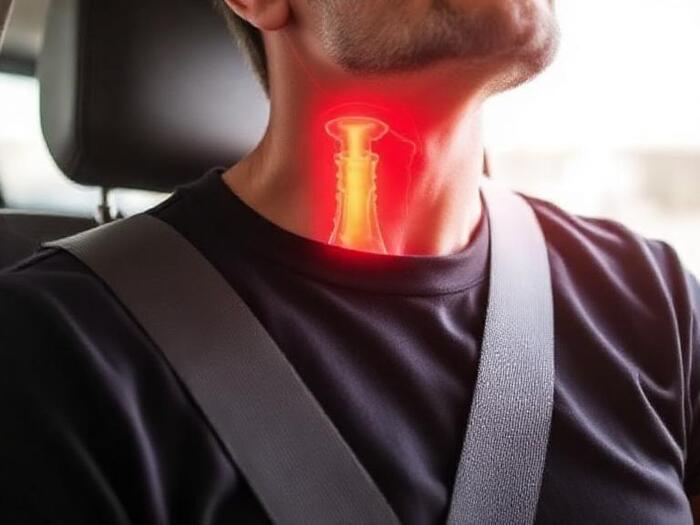
The open road defines a trucker’s life, but it comes with the constant risk of an accident. While immediate injuries are clear, some, like Thoracic Outlet Syndrome (TOS), emerge later, often stemming from severe seatbelt compression. This trauma damages nerves and vessels between the neck and shoulder, leading to chronic pain and crippling weakness that threatens a driver’s career. Addressing this requires specialized medical treatment and the right experienced legal support for trucking accident claims to protect their recovery and financial stability. Let’s examine TOS following seatbelt trauma and the therapies necessary for a trucker to regain health.
Understanding Seatbelt-Induced TOS
Thoracic Outlet Syndrome is a group of disorders that occur when blood vessels or nerves in the space between your collarbone (clavicle) and first rib (the thoracic outlet) become compressed. While TOS has several causes, the specific trauma of a seatbelt compression injury in a crash is particularly relevant for truckers.
During a sudden, violent stop, the seatbelt cinches down with incredible force, especially across the shoulder and chest. This focused pressure can directly injure or cause inflammation to the brachial plexus—a network of nerves that controls movement and sensation in the shoulder, arm, and hand—or compress the subclavian artery or vein.
The resulting TOS is often categorized as:
- Neurogenic TOS (NTOS): The most common type, involving compression of the brachial plexus nerves. Symptoms include muscle wasting at the base of the thumb, numbness, tingling, and chronic pain in the neck, shoulder, and arm.
- Vascular TOS (VTOS): Less common, involving compression of the subclavian artery (arterial TOS) or vein (venous TOS). Arterial symptoms might include coldness, paleness, or lack of pulse in the arm, while venous symptoms include arm swelling, heaviness, and a bluish discoloration.
For a trucker, where arm and hand dexterity are non-negotiable for steering, shifting, and essential functions, any degree of TOS is debilitating. The constant vibration and repetitive motions inherent to driving can also exacerbate the symptoms, creating a challenging cycle of pain and functional limitation.
The Cornerstones of TOS Therapy
The journey back from seatbelt-induced TOS is typically long and requires a multifaceted, non-operative approach as the first line of defense. The primary goal of therapy is to decompress the thoracic outlet by improving posture, strengthening muscles, and increasing the range of motion.
Physical and Occupational Therapy
Physical therapy (PT) is the undisputed cornerstone of TOS treatment. A specialized PT program will focus on exercises to:
- Improve Posture: Training to hold the shoulders back and down, which opens the thoracic outlet and reduces pressure on the neurovascular structures.
- Strengthen Muscles: Targeting the shoulder girdle muscles, especially the trapezius and rhomboids, to provide better support for the clavicle and shoulder.
- Nerve Glides: Gentle, rhythmic movements designed to help the compressed nerves of the brachial plexus move more freely through the tight spaces.
- Diaphragmatic Breathing: Teaching deep, abdominal breathing to decrease accessory neck muscle use, which often contributes to tension and compression.
Occupational therapy (OT) is also vital, focusing on modifying the trucker’s work environment and daily tasks. This includes assessing the truck’s cabin ergonomics, suggesting adjustments to the seat and steering wheel, and teaching proper lifting and reaching techniques to prevent symptom flare-ups while driving or loading/unloading cargo.
Medications and Other Non-Surgical Interventions
While therapy builds long-term relief, medications are often used to manage acute symptoms:
- Nonsteroidal Anti-inflammatory Drugs (NSAIDs): To reduce inflammation and pain.
- Muscle Relaxants: To ease muscle spasms in the neck and shoulder.
- Botox Injections: In some cases, a physician may use Botox to paralyze tight muscles, such as the scalene muscles, that are contributing to the compression. This can offer a diagnostic tool and temporary relief while the patient undergoes PT.
Surgical Intervention
If a patient undergoes a structured, comprehensive non-operative program for 3 to 6 months without significant improvement, surgical decompression may be considered. The most common procedure involves a first rib resection—the removal of a portion of the first rib—and/or the scalene muscles (scalene muscle excision) to permanently widen the thoracic outlet and release the compressed structures. Surgery is a major decision, but for a trucker facing career-ending symptoms, it can be the path to regaining full, pain-free function.
Final Thoughts: Secure Your Future with Legal Support
Recovering from TOS following a traumatic seatbelt injury is not just a medical challenge; it’s a financial and legal one. The long-term nature of physical therapy, the potential need for surgery, and the loss of income due to the inability to drive professionally can create an overwhelming burden. Documenting the connection between the accident trauma and the delayed onset of TOS is crucial for any successful claim. Therefore, securing experienced legal support for trucking accident claims is a critical step in the recovery process. An experienced attorney can help prove negligence, ensure all medical costs—including specialized PT and potential surgery—are covered, and fight for compensation for lost wages and pain and suffering.
