


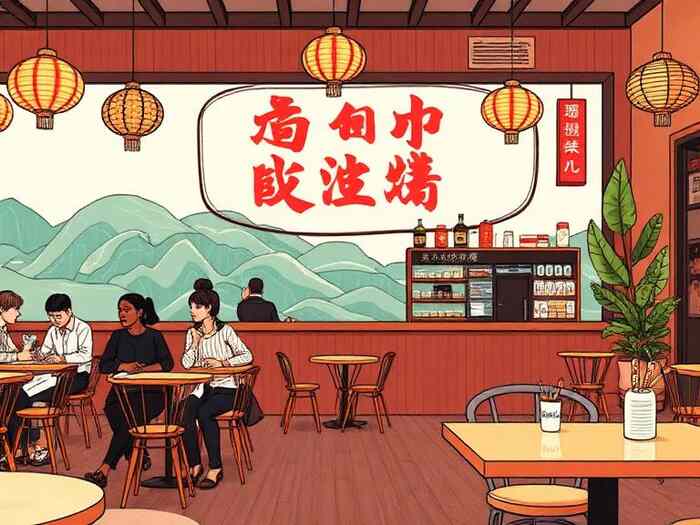
China was not, historically, a coffee country. Tea has been the dominant beverage for thousands of years.The idea that China would become one of the world’s most dynamic and fast-growing specialty coffee markets would have seemed unlikely as recently as two decades ago! Yet that is precisely what has happened. If you learn Chinese online, you may have heard of this! Chinese café culture has developed into something genuinely distinctive.
The scale of China’s coffee market expansion is significant by any measure. China is now one of the fastest-growing coffee markets in the world, with consumption increasing at a rate that has drawn sustained investment from both domestic and international operators. The number of coffee shops in Shanghai alone surpassed that of any other city in the world in recent years, overtaking longstanding coffee capitals like New York, London, and Melbourne! This growth is not driven primarily by multinational chains, though Starbucks maintains a large and profitable presence. It is driven increasingly by domestic brands — Luckin Coffee, which collapsed spectacularly in 2020 following an accounting scandal and subsequently rebuilt itself into a profitable operation, now operates more outlets in China than any foreign competitor. Alongside the chains, thousands of independent specialty cafés have opened in China’s tier-one and tier-two cities, many of them operating at a level of quality and conceptual ambition that matches or exceeds what is available in established coffee cultures elsewhere.
The Temple and Courtyard Café Phenomenon
One of the most visually striking developments in Chinese café culture is the integration of coffee shops into historic architectural settings. In Beijing, several cafés have opened within or immediately adjacent to working Buddhist and Taoist temples, offering espresso and pour-over coffee against a backdrop of incense smoke, ancient timber structures, and ceremonial courtyards. The Lama Temple area and the Temple of Earth have both attracted café operators who have leaned deliberately into the contrast between the contemporary beverage and the historical setting. In cities like Chengdu, Suzhou, and Hangzhou, cafés have been installed inside restored Ming and Qing dynasty courtyard homes, with stone floors, moon gates, and scholar’s rock gardens serving as the physical environment for a flat white or a cortado. The design sensibility is deliberate: these are not cafés that happen to be located in old buildings, but spaces that use architectural heritage as a core part of the experience they are offering. The aesthetic has proven enormously popular with younger Chinese consumers, who document and share these spaces extensively on platforms like Xiaohongshu (Little Red Book) and Douyin.
Hanfu Baristas and Cultural Identity
In a related development, a growing number of cafés — particularly in cities with strong heritage tourism industries — have adopted traditional Chinese dress as part of their service aesthetic. Baristas in some establishments in Xi’an, Luoyang, and Chengdu work in hanfu, the broad category of pre-Qing dynasty Chinese dress that has experienced a significant revival among younger generations as an expression of cultural pride and identity.
This is not purely a marketing exercise, though it functions as one. The hanfu revival is a genuine grassroots cultural movement that predates its commercial applications, and its appearance in café culture reflects a broader trend among younger urban Chinese consumers who are increasingly interested in engaging with and reinterpreting traditional culture rather than simply inheriting it passively. The café, in this context, becomes a site where contemporary consumer culture and historical identity are actively negotiated.
Local Ingredients and the Chinese Flavor Profile
Beyond aesthetics, one of the most substantive ways in which Chinese café culture has differentiated itself is through the integration of local ingredients into coffee-based drinks. This goes considerably further than the matcha lattes and red bean pastries that appear in Westernized Asian café concepts internationally. Chinese specialty cafés have developed drinks incorporating osmanthus flower, a fragrant blossom widely used in traditional Chinese desserts and teas; baijiu, China’s high-proof grain spirit, used in small quantities to add complexity to espresso-based drinks; jujube, or Chinese red date, which contributes a deep caramel sweetness; and various regional teas used as bases or flavor modifiers. Sichuan cafés have experimented with mala-flavored drinks — a combination of numbing spice and chili heat applied to coffee in ways that are surprising but, in the right hands, genuinely compelling. The underlying logic is a form of culinary localization: taking a foreign beverage format and reconfiguring it around a Chinese flavor vocabulary.
Teaching institutions like GoEast Mandarin in Shanghai have an approach to language education which is grounded in exactly the kind of cultural literacy that makes these encounters navigable. Their programs treat Mandarin as a culturally embedded practice, teaching students to understand references, associations and social contexts that shape how Chinese is actually used.
The Broader Significance of China’s Café Culture
The café, historically a Western institution, has been adopted, adapted, and in many cases improved upon by Chinese operators who have brought to it a different set of aesthetic ingredients and cultural ambitions. The result is a coffee culture that is confidently and distinctly Chinese. For anyone trying to understand contemporary urban China — its creative industries, its youth culture, its relationship with its own history — spending time in its cafés is a surprisingly productive starting point. The design, the menu, the music, and the clientele all tell a story about where Chinese cities are and where they are headed.
