


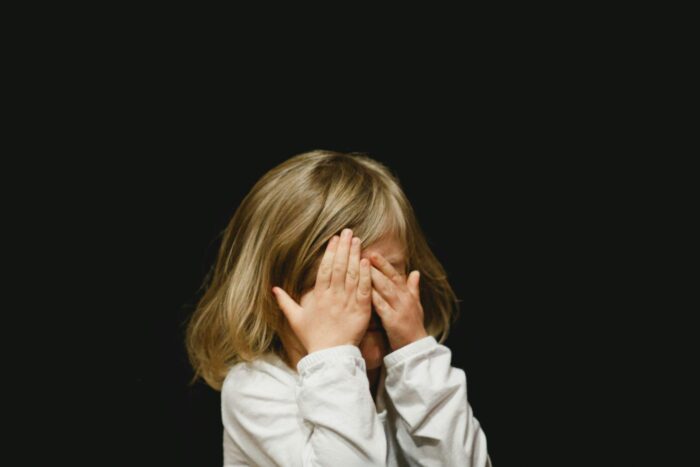
Every child worries. That is simply part of growing up.
Worrying about a test, feeling nervous before a big game, getting butterflies on the first day of school, these are normal parts of childhood that most kids move through with a little reassurance and time. But for a growing number of children, worry is not something that passes. It is something that takes up permanent residence, shaping how they experience school, friendships, family life, and the world around them.
Childhood anxiety is now one of the most common mental health concerns affecting children globally, and in many communities it remains significantly underidentified and undersupported. Parents often spend months or even years wondering whether what they are seeing in their child is serious enough to warrant attention, caught between not wanting to overreact and not wanting to miss something important.
This article is for those parents. Here is what you actually need to know.
The Difference Between Normal Worry and Anxiety
Understanding the line between everyday worry and clinical anxiety is the starting point for everything else.
Normal worry in children tends to be:
- Tied to a specific, real trigger (an upcoming test, a social situation, a new experience)
- Proportionate to the situation at hand
- Temporary, meaning it resolves once the trigger passes
- Manageable with basic reassurance and parental support
Anxiety, by contrast, tends to be:
- Persistent, meaning it does not resolve when the trigger passes or may not be clearly tied to any specific trigger at all
- Disproportionate, with the level of distress far exceeding what the situation warrants
- Interfering, meaning it is actively disrupting the child’s ability to function at school, at home, or in social settings
- Physical, often showing up as headaches, stomachaches, sleep disruption, or fatigue that has no clear medical explanation
One of the most important things parents can understand is that anxiety in children does not always look like fear or crying. It can look like anger, defiance, avoidance, clinginess, perfectionism, or constant reassurance-seeking. A child who refuses to go to school every Monday morning may be acting out, or may be experiencing real anxiety around separation or social situations. A child who insists on checking and rechecking homework, who melts down over small changes to routine, or who avoids social situations that they used to enjoy, may be showing anxiety in a form that is easy to misread.
Why Childhood Anxiety Deserves Serious Attention
There is still a tendency in some communities to minimise childhood anxiety, to view it as a phase, a personality trait, or a parenting issue rather than a genuine mental health concern. This is worth examining directly, because the evidence points clearly in the other direction.
Untreated anxiety in childhood does not typically resolve on its own. Left without support, it tends to intensify over time and can significantly affect academic performance, social development, and self-esteem. Children who experience persistent anxiety are also at higher risk of developing depression in adolescence, and anxiety disorders in adulthood.
On the other side of that equation, children who receive appropriate support early tend to do significantly better across every measure. They develop stronger emotional regulation skills, healthier coping strategies, and greater confidence in their ability to manage difficult feelings. The brain is most adaptable during childhood, which means the earlier intervention happens, the more lasting the impact tends to be.
This is not about medicalising normal childhood experience. It is about recognising when a child needs more support than the family environment alone can provide, and getting that support in place before the patterns become more entrenched.
What Therapy for Anxious Children Actually Involves
For many parents, the idea of sending their child to therapy brings up its own set of worries. What will happen in those sessions? Will my child be labelled? Will talking about it make things worse?
These are understandable concerns, and they deserve honest answers.
Professional therapy for children dealing with anxiety looks nothing like adult therapy in a traditional sense. Skilled child therapists understand that children do not process their inner world through conversation alone. They use play, art, storytelling, movement, and other creative approaches that allow children to explore their feelings without having to name or articulate them directly.
Cognitive Behavioural Therapy (CBT), adapted for children, is one of the most well-researched and effective approaches for childhood anxiety. It helps children understand the connection between their thoughts, physical sensations, and behaviours, and builds practical tools for managing the anxiety response when it shows up. This is not about eliminating worry entirely. It is about helping children develop a different relationship with their anxiety so it no longer runs the show.
Therapists working with anxious children also work closely with parents. What happens in the therapy room needs to be supported at home, and parents often gain significant insight into patterns they may not have realised they were reinforcing. This is not about blame. Parental responses to a child’s anxiety are natural and loving. But some common responses, like constant reassurance or avoiding anxiety-provoking situations altogether, can actually maintain the anxiety cycle over time. Therapy helps families understand this and develop more effective approaches together.
Signs It May Be Time to Reach Out
If you are unsure whether your child’s anxiety warrants professional support, here are some practical indicators that it is time to take the next step:
- Your child’s worry is affecting their attendance or performance at school
- They are avoiding activities, friendships, or experiences they previously enjoyed
- Physical complaints like stomachaches and headaches are recurring without a clear medical cause
- Sleep is consistently disrupted by worry or fear
- Reassurance-seeking is constant and does not seem to help, even temporarily
- The anxiety has been present for more than a few weeks and is not improving
- You, as a parent, feel at a loss for how to help
Trust your instincts. Parents often sense when something is off before they can articulate exactly what it is. That instinct is worth acting on.
A Word About Diverse Communities and Mental Health Access
For many families, particularly those from communities where mental health stigma remains significant, seeking professional support for a child can feel like a significant step. There may be concerns about what seeking help says about the family, cultural beliefs about how emotional struggles should be handled, or practical barriers around cost and access.
These barriers are real and they matter. But it is also worth knowing that childhood anxiety crosses every community, every background, and every family structure. It is not a reflection of parenting failure or family dysfunction. And the children who tend to thrive are the ones whose families were willing to ask for help when they needed it.
Getting support for an anxious child is not a last resort. It is a first step.
