


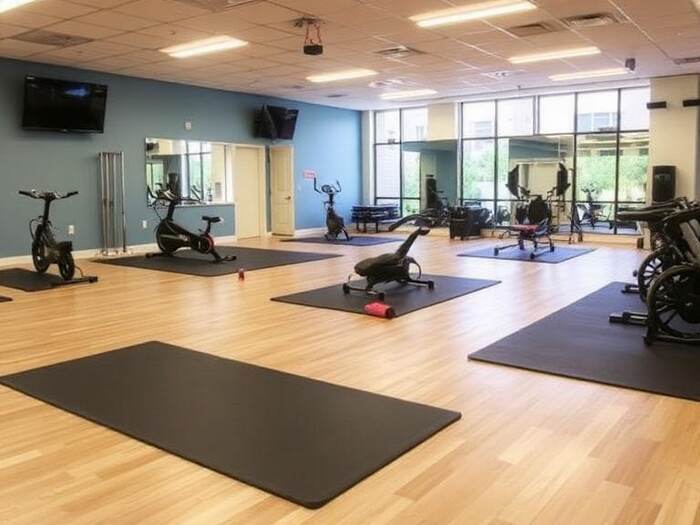
Adaptive fitness spaces are inclusive exercise environments that adjust to varying physical abilities, cultural needs, and comfort levels, rather than forcing people to adapt to rigid gym standards. Across many regions, access to fitness remains uneven, with global health data showing that people with disabilities and older adults are significantly less likely to meet physical activity guidelines due to environmental barriers rather than lack of motivation.
As communities become more diverse in age, ability, and background, the way fitness spaces are designed directly affects well-being outcomes. Adaptive fitness spaces aim to remove physical and social barriers, improve physical health, support mental wellbeing, and strengthen community connection. This article explains what adaptive fitness spaces are, who they serve, why traditional gyms often fall short, and how inclusive design creates healthier communities.
What Are Adaptive Fitness Spaces?
Adaptive fitness spaces are inclusive exercise environments that modify equipment, layout, and programming to support people with varied physical, cognitive, and cultural needs. Traditional gyms are typically built around fixed machines, standardized movements, and high-intensity expectations. Adaptive fitness spaces shift that model by prioritizing flexibility and safety first.
These spaces feature adjustable equipment, wider circulation paths, and scalable exercise programs, enabling users to engage confidently regardless of age or ability. Adaptive fitness spaces fit into community wellbeing by enabling consistent participation, which is the foundation of long-term physical health.
Who Are Adaptive Fitness Spaces Designed For?
Adaptive fitness spaces are designed for people who benefit from flexibility rather than uniformity. They primarily serve individuals with physical disabilities, older adults managing mobility changes, people recovering from injury, and beginners who may feel intimidated by conventional gym culture.
They also support culturally diverse populations by offering non-judgmental environments, flexible programming, and privacy options that respect different comfort levels around exercise.
Where Are Adaptive Fitness Spaces Commonly Found?
Adaptive fitness spaces are most commonly found in community-centered environments rather than performance-driven gyms. They appear in recreation centers, rehabilitation clinics, senior living facilities, schools, apartment complexes, and independent gyms focused on wellbeing.
When fitness is integrated into places people already trust, participation becomes easier and more consistent.
Why Do Diverse Communities Face Barriers to Traditional Fitness Spaces?
Diverse communities face barriers to traditional fitness spaces because most gyms are designed around a narrow definition of ability and experience. Fixed-height machines, narrow walkways, and complex equipment interfaces exclude many users from safe participation.
Economic constraints, language barriers, cultural norms, and lack of representation further discourage engagement. These overlapping barriers make fitness feel inaccessible even when facilities exist nearby.
Physical Accessibility Barriers
Physical accessibility barriers are structural limitations that prevent independent and safe use of fitness environments. Common issues include narrow aisles, machines that require full mobility to enter or exit, and inaccessible locker rooms.
Adaptive design addresses these issues by prioritizing adjustability, clearance, and ease of use so individuals can exercise without assistance or risk.
Cultural and Social Barriers
Cultural and social barriers are non-physical factors that affect whether people feel welcome in a fitness space. These include body image pressure, gender expectations, unfamiliar exercise norms, and language limitations.
Adaptive fitness spaces reduce these barriers through neutral layouts, inclusive messaging, and programming that emphasizes health and function rather than appearance.
How Do Adaptive Fitness Spaces Improve Physical Wellbeing?
Adaptive fitness spaces improve physical well-being by enabling safe, consistent movement across a wide range of abilities. By allowing equipment and programming to adapt to the user, these environments reduce injury risk while supporting strength, balance, mobility, and cardiovascular health.
Consistency is the primary driver of physical improvement. When exercise feels manageable and safe, long-term adherence improves, and health outcomes follow.
Adapted Fitness Equipment
Adapted fitness equipment is exercise hardware designed to adjust resistance, positioning, and movement patterns to individual users. Common examples include seated strength machines, assisted plate-loaded systems, low-impact cardio devices, and modular resistance tools.
Many adaptive fitness spaces rely on adjustable and refurbished machines, and sourcing reliable used gym equipment allows facilities to expand accessibility while controlling costs and maintaining safety standards. This approach also supports sustainability by extending the life cycle of durable equipment.
Inclusive Exercise Programming
Inclusive exercise programming is structured activity planning that scales intensity, complexity, and duration based on user capability. Instead of fixed repetitions or loads, programs often use time-based or effort-based frameworks.
This approach allows participants to progress at their own pace while remaining part of a shared experience, reinforcing consistency and confidence.
How Do Adaptive Fitness Spaces Support Mental and Social Wellbeing?
Adaptive fitness spaces support mental and social well-being by reducing anxiety and fostering a sense of belonging. When users feel safe and respected, exercise becomes a positive routine rather than a source of stress.
Over time, this improves confidence, emotional resilience, and social engagement within the community.
Building Confidence Through Inclusive Design
Inclusive design is the intentional removal of environmental stressors that discourage participation. Features such as clear signage, simplified equipment interfaces, and optional private workout zones help users feel competent and in control.
Confidence grows when individuals can focus on movement instead of self-consciousness.
Encouraging Community Interaction
Community interaction develops naturally when spaces are designed for shared use rather than competition. Group classes, flexible layouts, and multi-ability programming encourage conversation and mutual support.
This social reinforcement strengthens participation and transforms fitness into a shared habit.
What Are the Main Benefits of Adaptive Fitness Spaces?
Adaptive fitness spaces offer multiple benefits that extend beyond physical exercise. There are six key advantages.
- Improving access to exercise for underserved populations
- Supporting long-term health outcomes through consistency
- Reducing injury risk with adjustable equipment
- Encouraging participation across age and ability levels
- Strengthening social connections within communities
- Supporting rehabilitation and aging-specific use cases
What Are the Limitations of Adaptive Fitness Spaces?
Adaptive fitness spaces also present challenges that must be addressed during planning. There are four primary limitations.
- Increasing upfront investment requirements
- Requiring thoughtful layout and space planning
- Demanding staff training and supervision expertise
- Limiting availability in resource-constrained regions
How to Design an Adaptive Fitness Space
Designing an adaptive fitness space involves coordinated planning across equipment, layout, and user needs. There are five main steps.
- Assess community demographics and ability ranges
- Select adjustable and inclusive equipment
- Design layouts that prioritize flow and safety
- Train staff in adaptive support practices
- Collect ongoing user feedback for improvement
Step 1: Assess Community Needs
Community assessment identifies who the space will serve and how it will be used. Surveys, demographic analysis, and stakeholder input help define ability ranges, cultural preferences, and participation goals.
This ensures the space reflects real needs rather than assumptions.
Step 2: Select Appropriate Equipment
Equipment selection focuses on flexibility, safety, and long-term usability. Adjustable machines support progression without requiring replacement, making them ideal for adaptive environments.
Step 3: Design Layouts That Prioritize Flow and Safety
Layout design determines how easily users can move through the space and access equipment without stress or risk. Clear pathways, adequate turning space, and logical equipment placement reduce congestion and improve independence. Safety-focused layouts also minimize fall risk and make supervision easier without feeling restrictive.
Step 4: Train Staff in Adaptive Support Practices
Staff training ensures that adaptive equipment and programming are used correctly and confidently. Instructors and floor staff should understand how to assist users with different abilities, adjust machines properly, and communicate clearly and respectfully. Well-trained staff transform adaptive design into real-world inclusion.
Step 5: Collect Ongoing User Feedback for Improvement
User feedback provides insight into how the space performs in daily use. Regular check-ins, surveys, and informal conversations help identify what works, what creates friction, and where adjustments are needed. Continuous feedback allows the space to evolve alongside the community it serves.
How Much Does It Cost to Build an Adaptive Fitness Space?
The cost to build an adaptive fitness space typically ranges from 25,000 to 150,000 USD, depending on scale and equipment selection. Five factors influence total cost.
- Equipment type and adjustability
- Facility size and layout complexity
- Flooring and safety features
- Staff training requirements
- Maintenance and inspection needs
To manage long-term risk and compliance, many facilities partner with third-party equipment inspection services to verify safety, performance, and regulatory alignment over time.
Where Are Adaptive Fitness Spaces Most Commonly Used?
Adaptive fitness spaces are used across a wide range of community-focused settings. There are five primary applications.
- Community recreation centers
- Rehabilitation clinics
- Educational institutions
- Senior living facilities
- Independent wellbeing-focused gyms
Adaptive Fitness Spaces vs Traditional Gyms
Adaptive fitness spaces prioritize inclusion, while traditional gyms prioritize performance. Adaptive environments focus on flexibility, accessibility, and well-being impact, whereas traditional gyms emphasize standardized equipment and intensity.
Comparing accessibility, equipment adaptability, cost structure, user experience, and health outcomes shows why adaptive spaces better serve diverse communities.
What Should Communities Look for When Choosing Adaptive Fitness Equipment?
Communities should prioritize adjustability, safety, and durability when selecting adaptive fitness equipment. Machines should accommodate a range of body types, mobility levels, and progression stages.
Ease of maintenance, clear instructions, and verified safety standards are equally essential to ensure long-term trust and usability.
Conclusion
Adaptive fitness spaces address real barriers that prevent many people from engaging in physical activity. By designing environments that prioritize flexibility and inclusion, communities improve physical health, mental well-being, and social connection.
When movement becomes accessible, participation increases, and well-being follows. Adaptive fitness spaces are not niche solutions. They are essential infrastructure for healthier, more inclusive communities.
