


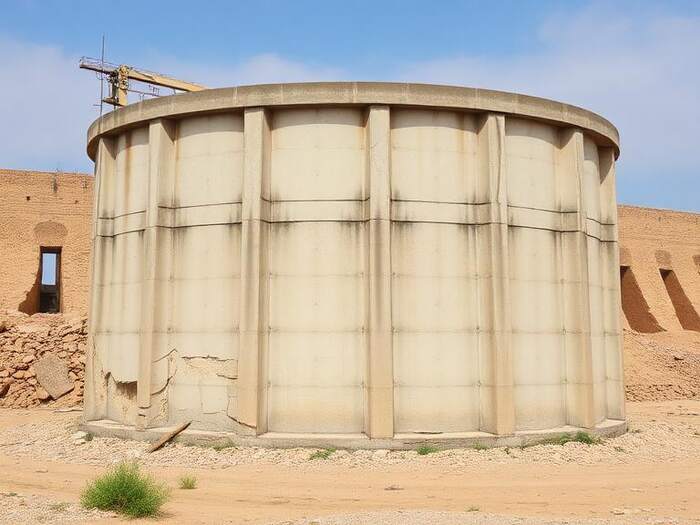
When we think of durable materials, concrete is usually at the top of the list. We build skyscrapers, dams, and highways out of it. We assume that once a concrete septic tank is buried in the ground, it will sit there, unchanged, for a hundred years.
However, technicians often open the lids of 20-year-old tanks to find a shocking sight. The walls look like Swiss cheese. The outlet baffle has disintegrated and fallen into the sludge. You can scrape the “concrete” off the ceiling with a spoon; it has the consistency of wet cottage cheese.
This isn’t caused by cheap materials or bad installation. It is caused by a biological and chemical chain reaction known as Microbiologically Induced Corrosion (MIC). Essentially, your septic tank is eating itself from the inside out.
The Source: Hydrogen Sulfide (The Rotten Egg)
The process begins in the water. As we discussed previously, a septic tank relies on anaerobic bacteria to digest waste. A byproduct of this digestion is gas—specifically methane and hydrogen sulfide ($H_2S$).
Hydrogen sulfide is the gas responsible for the “rotten egg” smell of sewage. In the water, it is relatively harmless to the concrete. But gases rise. They fill the “headspace” of the tank—the air gap between the water level and the concrete lid.
If the tank is not properly vented (usually through the roof vent of your house), this gas accumulates. It creates a humid, sulfur-rich atmosphere trapped inside the concrete box.
The Catalyst: Thiobacillus Bacteria
Concrete is highly alkaline (high pH). In its natural state, it is hostile to acid. However, the humid environment of the tank allows a specific type of bacteria, Thiobacillus, to colonize the moist surface of the concrete ceiling and walls above the water line.
These bacteria are “aerobic”—they need oxygen (which is present in the air gap) and they feed on sulfur (which is present in the gas).
It is a perfect storm. The bacteria consume the hydrogen sulfide gas and metabolize it. The waste product they excrete is strictly chemical warfare: Sulfuric Acid ($H_2SO_4$).
The Chemical Attack: Concrete to Gypsum
When sulfuric acid hits concrete, a violent chemical reaction occurs. Concrete is made of cement paste (calcium silicate hydrate) binding together rocks and sand.
The acid attacks the calcium in the cement. It converts the hard cement paste into calcium sulfate—commonly known as gypsum.
Gypsum is a soft mineral. It is the white powder used to make drywall. It has no structural strength. It expands as it forms, causing the surface of the concrete to crack, blister, and spall (flake off).
This is why the corrosion is usually worst at the water line and on the underside of the lid. The bacteria are turning your reinforced concrete tank into a drywall box. Over time, this “mush” can penetrate an inch or more into the walls, exposing the steel rebar inside. Once the acid hits the steel, the rebar rusts and expands, blowing the concrete apart from the inside.
The Warning Signs
How do you know if MIC is attacking your system?
- Crumbling Baffles: The first victim is usually the concrete outlet baffle. Because it sits right at the water line where the gas is thickest, it often corrodes and snaps off. This is a disaster, as it allows floating grease to flow directly into your drain field.
- Exposed Aggregate: If you look at the walls during a pump-out, they should be smooth. If you see the rocky aggregate sticking out like gravel in a driveway, it means the smooth cement paste holding them has been eaten away.
- White Paste: In advanced stages, you can literally poke a screwdriver into the concrete wall and it will sink in.
Prevention and Survival
This form of corrosion is natural, but it is accelerated by poor ventilation and high turbulence (which releases more gas).
Modern tank manufacturers are fighting back. Many new concrete tanks are built with additives to make them acid-resistant, or they are coated with bitumastic (tar-like) sealers on the inside. Plastic (polyethylene) tanks are immune to this specific type of corrosion, which is why they are becoming popular in areas with high sulfur water.
Conclusion
For the homeowner with an older concrete system, vigilance is key. A septic tank is not an inert rock; it is a chemical reactor. The fumes generated by your waste are actively trying to dismantle the vessel that holds them.
If you notice your tank lid looking pitted or your baffles deteriorating during an inspection, do not wait for the roof to cave in. Specialized septic tank repair companies can often save the structure by retrofitting plastic liners or installing corrosion-resistant PVC baffles, halting the acid attack before your backyard infrastructure turns into dust.
