


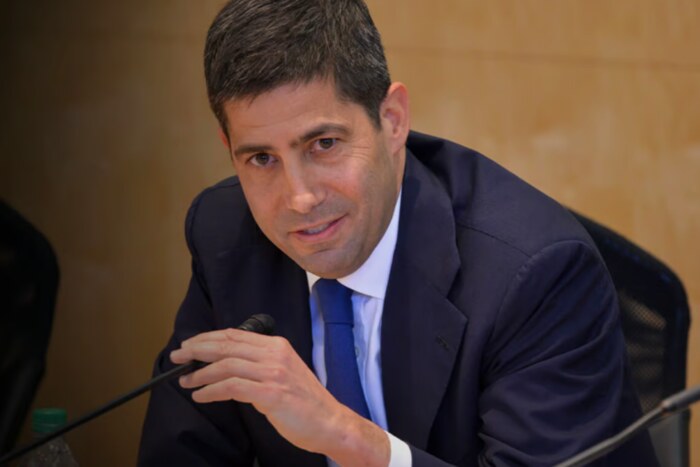
President Donald Trump has nominated former Federal Reserve governor Kevin Warsh to be the next Chair of the U.S. Federal Reserve, choosing him to succeed current Chair Jerome Powell when Powell’s term expires in May 2026. The announcement marks a pivotal moment in U.S. economic policy as the central bank prepares for a potential shift in leadership and monetary direction.
Trump made the nomination public on Friday, praising Warsh and emphasizing his experience and qualifications. Warsh previously served on the Federal Reserve’s Board of Governors from 2006 to 2011, where he was involved in navigating monetary policy during the global financial crisis.
A Fed Leader With Deep Experience and Criticisms
Kevin Warsh, 55, is known both for his extensive experience in central banking and for being a vocal critic of certain Federal Reserve policies. Before his nomination, he was a visiting fellow at Stanford University’s Hoover Institution and a lecturer at the Stanford Graduate School of Business. He has also held roles in private finance, including partnerships with investment firms.
Trump’s selection of Warsh reflects a desire for a Federal Reserve leadership that aligns more closely with the administration’s economic priorities, particularly on interest rates. Trump has repeatedly criticized Powell and other Fed officials for moving too slowly on rate cuts, which are a key focus of the president’s broader economic agenda.
Controversial Views and Policy Focus
Warsh’s nomination has drawn attention because of his history of critiquing the Federal Reserve’s approach to monetary policy, especially in the years following the financial crisis. While once viewed as a monetary hawk — favoring tighter policy — he has in recent years been more open to discussions around lower interest rates, an approach that broadly fits with Trump’s calls for easier monetary conditions.
Supporters say Warsh’s deep institutional knowledge and relationships on Wall Street could benefit the central bank. Critics, however, warn that his nomination highlights concerns about political influence over an institution traditionally known for its independence. Senate confirmation is required before Warsh can officially take the position, and the process could be contentious.
Central Bank Independence Under Scrutiny
The Federal Reserve has long operated with a significant degree of independence from the executive branch to insulate monetary policy from short-term political pressures. Trump’s outspoken criticisms of the Fed and his push for a chair aligned with his economic views underscore a growing debate over the balance between political leadership and central bank autonomy.
If confirmed, Warsh would inherit responsibility for setting the nation’s key interest rates, guiding inflation policy, and overseeing economic stability at a time when financial markets remain sensitive to rate expectations and economic growth signals.
What Happens Next
With Trump’s formal nomination now official, the next step is a Senate confirmation process, where lawmakers will review Warsh’s record, policy views, and suitability for one of the most influential economic roles in the U.S. government. Market observers and policymakers alike will be watching closely, as the Fed’s leadership direction has significant implications for borrowing costs, investment flows, and overall economic growth.
This nomination completes months of speculation about Trump’s choice for the next Federal Reserve chair and sets the stage for a pivotal moment in U.S. economic policymaking as Jerome Powell’s term draws to a close.
